



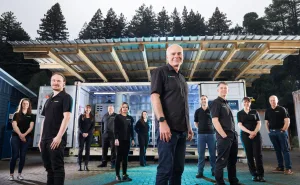
Cetogenix and Scion team
Cetogenix is a New Zealand cleantech company pioneering modular solutions for waste valorisation, including enhanced production of renewable natural gas and sustainable fertilizer alternatives. Since its formation in 2022, the company has evolved from an innovator in general waste management into a leader in circular energy systems designed to improve energy resilience, reduce emissions and unlock value from organic waste streams.
Support from the BPA has been instrumental in validating its technology and accelerating its pathway to commercialisation.
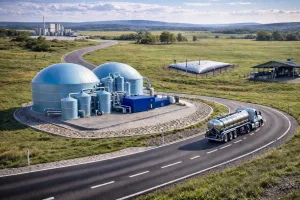
Ceto-Hub Scenario
New Zealand produces significant volumes of under-utilised agricultural and industrial residues. These materials often deliver limited nutrient value, incur management costs and contribute to greenhouse gas emissions and water quality degradation. While global markets increasingly convert such residues into renewable natural gas (RNG), New Zealand’s pasture-based farming system captures only a small fraction of manure, making conventional anaerobic digestion (AD) uneconomic at a single-farm scale.
Cetogenix recognised this mismatch and has developed a more flexible, scalable approach. Its proprietary Ceto-Boost™ platform uses heat, pressure and air—without added chemicals—to reduce waste volumes by over 95% and convert complex residues into valuable outputs, including RNG, green ammonia, recycled phosphates and biogenic CO₂. The process also removes contaminants, such as microplastics, and produces outputs far less carbon-intensive than fossil alternatives.
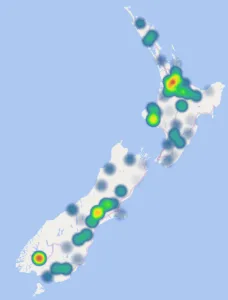
Ceto-Hub locations NZ
The Ceto-Hub model
To address New Zealand’s structural challenges, Cetogenix developed the Ceto-Hub. Rather than relying solely on farm waste, Ceto-Hubs aggregate regional feedstocks – such as dairy processing effluent and agro-industrial residues—to create consistent, scalable inputs for energy production.
This distributed model integrates anaerobic digestion with Ceto-Boost™, shifting the on-farm system from waste treatment to resource recovery. By stabilising and enhancing feedstocks, the platform increases gas yields while enabling recovery of nutrients, such as green ammonia for reuse on farms.
Feasibility studies confirmed that while standalone on-farm digesters struggle to justify investment, integration with Ceto-Boost™ significantly improves economic and environmental performance. A single hub could produce around 77,000 GJ of RNG annually (equivalent to ~8,300 households), and a national network could unlock most of New Zealand’s estimated biogas potential.
BPA-supported validation
BPA funding has played a critical role in advancing the Ceto-Hub concept from theory to a demonstration-ready technology. Working with research partners, Cetogenix developed reactor systems to replicate real-world conditions and validate system performance.
Results confirmed strong alignment with earlier modelling. Integration with Ceto-Boost™ improved substrate availability and conversion efficiency, demonstrating clear gains in energy recovery. Methane yields reached up to 261 L/kg VS in optimised configurations, placing performance in the upper range of comparable co-digestion systems.
The programme also showed that anaerobic digestion can reduce greenhouse gas emissions from farm dairy effluent storage by up to 85%, while Ceto-Boost™ significantly enhanced nutrient stabilisation and recovery. Glasshouse trials further demonstrated that treated digestates significantly improved ryegrass growth, confirming agronomic value alongside energy production.
Importantly, the research addressed the challenges of feedstock variability across sectors, including dairy, meat processing, and pulp and paper. Rather than treating variability as a constraint, it was incorporated into system design, improving resilience and scalability. This work advanced the technology from laboratory concept to demonstration-ready scale under New Zealand conditions.
Building a commercial pathway
Cetogenix is now progressing toward commercial deployment through a staged development approach. In South Waikato, the company is partnering with Trinity Lands, which operates 23 dairy farms, to deliver the first commercial-scale Ceto-Hub demonstration.
The selected site offers proximity to gas transmission infrastructure, enabling biomethane injection into the national grid, or direct supply to local industrial users. It also aligns with precision agriculture practices, where optimal waste nutrient recovery can substantially offset synthetic fertiliser demand.
Initial phases have focused on technical validation and scale-up to de-risk full deployment. Following this, Trinity Lands has committed to capital investment for on-farm infrastructure, with potential expansion to additional locations. The project also draws on insights from >NZD20 million in related projects by Cetogenix in European and UK water sectors, strengthening its commercial foundation.
The value of BPA support
Beyond funding, BPA has enabled access to independent scientific expertise and facilities, providing critical third-party validation. This credibility has strengthened engagement with industry partners by supporting feedstock and offtake agreements, investment decisions and market development.
The collaborative ecosystem has allowed Cetogenix to move rapidly from concept to a validated, scalable solution. Without this support, achieving the same level of technical confidence and stakeholder alignment would have been significantly more challenging.
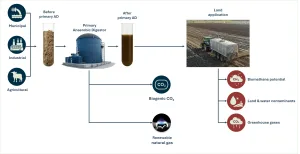
Cetoboost process – Before
A scalable model for New Zealand
Ceto-Hubs represent a new model for managing New Zealand’s primary sector organic wastes – transforming them into a resource for renewable energy and nutrient recovery. Key benefits include:
- Increased domestic renewable gas production
- Reduced greenhouse gas emissions and water impacts
- Improved nutrient efficiency and reduced reliance on imported fertilisers
- New revenue streams and jobs for rural communities
- Enhanced regional energy resilience
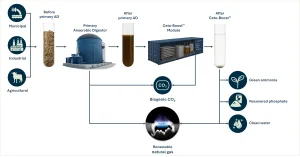
Cetoboost process – After
By linking agriculture, industry, and energy systems, Cetogenix is helping position New Zealand at the forefront of circular bioeconomy infrastructure. With BPA support, the company has demonstrated that regional waste streams can underpin a viable, scalable pathway to renewable gas production and sustainable agricultural systems.
As New Zealand faces energy security challenges and increasing pressure to reduce emissions, the Ceto-Hub model provides a credible blueprint for future infrastructure—one that turns waste into value while strengthening both the economy and the environment.
Comments are closed.