



Last week in Rotorua, the BPA’s second annual Sustainable Solutions Symposium brought together around 150 researchers, innovators, founders, industry leaders and investors working across Aotearoa New Zealand’s growing bioeconomy.
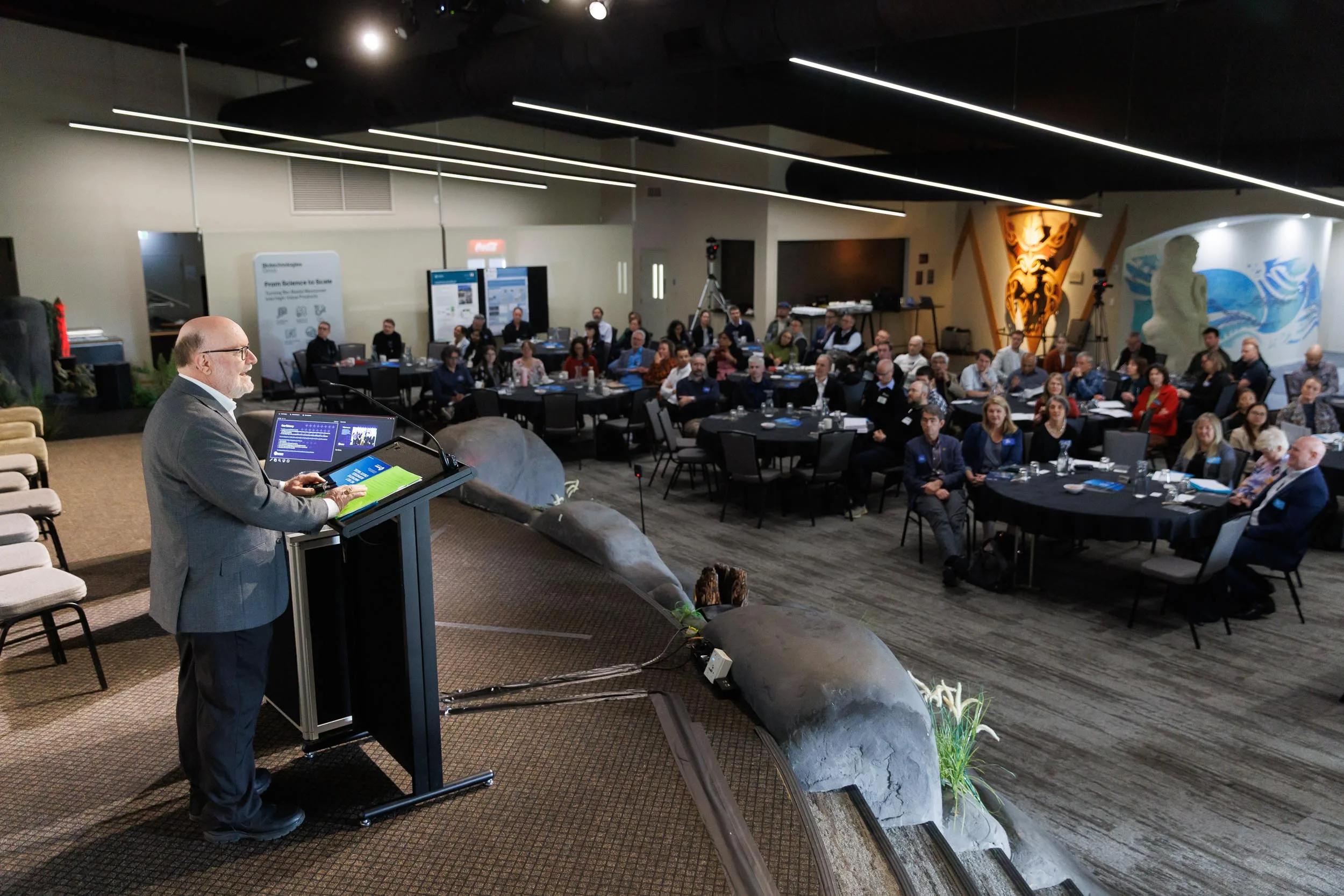
The event opened with remarks from Hon Penny Simmonds, Minister of Science, Innovation and Technology, following an introduction from BPA Chair Max Kennedy. Both highlighted the role the BPA has played over the past decade in connecting science and industry to accelerate innovation and commercialisation across New Zealand’s bioeconomy. Minister Simmonds emphasised that the future success of the sector would depend on “what we do next together,” setting the tone for a day that focused on collaboration and action.
The Bioeconomy Science Institute’s transition CEO Mark Piper reinforced the scale of the opportunity ahead, referencing the Government’s ambition to double the value of exports by 2034.
Achieving that target, he said, would require far more than incremental growth.
“That’s not going to come by simply doing more of the same,” he said, challenging attendees to think differently about innovation and commercialisation. He emphasised the importance of openness across the sector, encouraging organisations to share knowledge where possible to accelerate collective progress.
Mark also reflected on the importance of timing, pointing out that Nespresso first launched in 1976 — a reminder that even great ideas need the right market conditions and sustained support to succeed. He stressed the importance of building stronger commercialisation pathways around New Zealand’s growing research momentum.
Throughout the day, speakers reflected on the realities of innovation — including the risks involved. BPA General Manager Nicky Solomon reminded attendees that “being in business is risky, being innovative is risky,” while also celebrating the opportunity to learn from one another. That spirit of shared learning and cross-sector collaboration was evident across the symposium’s presentations and workshops.
One of the strongest themes throughout the symposium was the emergence of longer-term impact stories from the BPA ecosystem. Beyond research projects alone, attendees heard examples of companies, products and partnerships beginning to achieve genuine commercial traction.
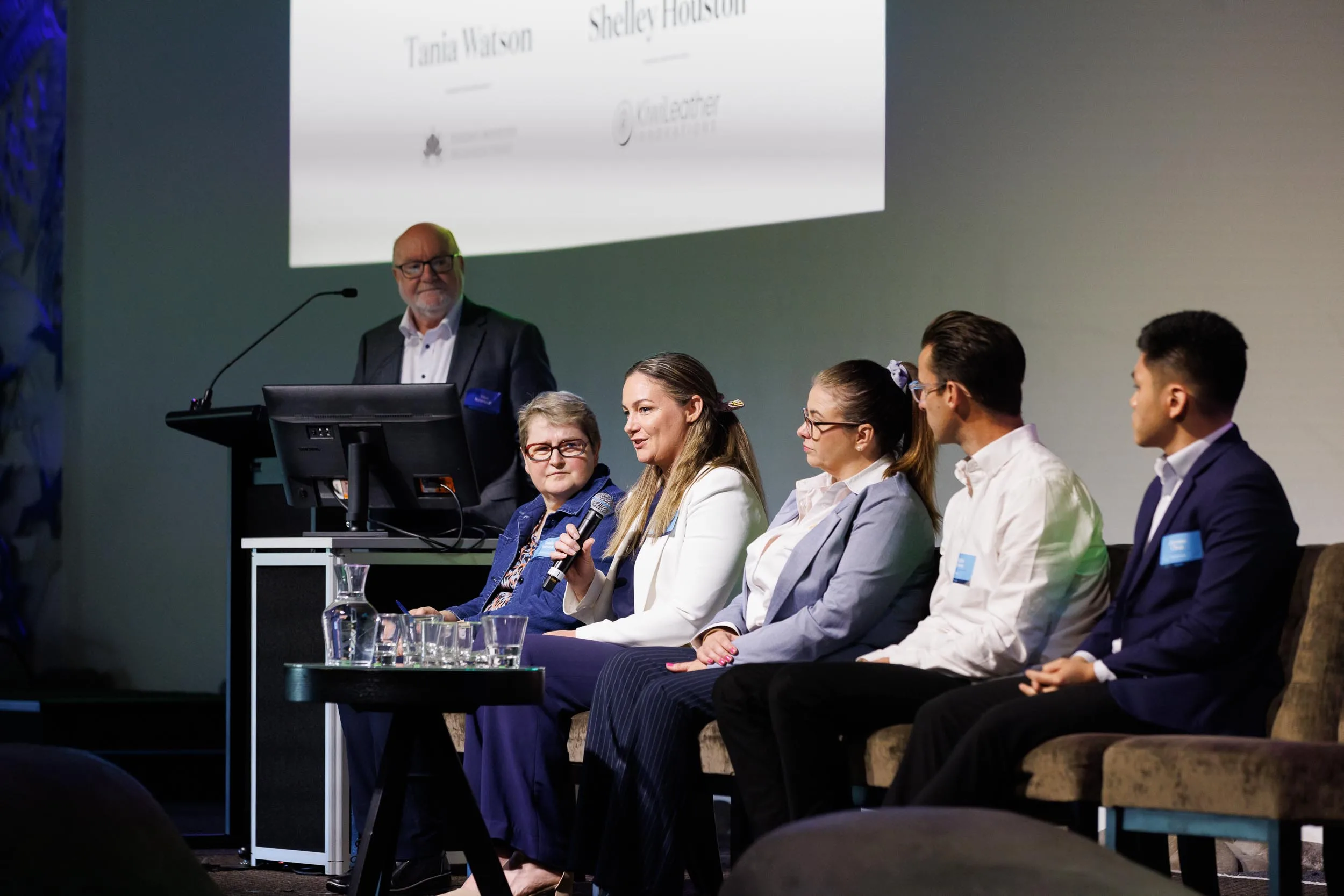
Shelley Houston shared the journey behind KiwiLeather Innovations, explaining how an early fascination with chemistry through her cosmetics company eventually evolved into developing sustainable, animal-free leather alternatives from kiwifruit waste. With increasing interest from Europe in sustainable automotive interiors, the opportunity is becoming increasingly tangible.
Angus Brown spoke about scaling Ārepa’s sarmentosin molecule derived from blackcurrant byproducts, alongside growing international interest in the company’s brain health and menopause research. His ambition was clear: to deliver “a billion better brain days” by 2030.
Tania Watson from the Bakery Industry Research Trust delivered a grounded and practical account of efforts to address New Zealand’s estimated 9,000 metric tonnes of bread waste and 220 million single-use plastics simultaneously. While the technology itself proved successful, Tania said that the real challenge lies in the economics.
“Sustainability initiatives still need to stack up commercially to achieve widespread adoption,” she said.
Jerome Chua shared the story of transforming crayfish waste into durable fishing lures for commercial vessels — a project that began as a master’s initiative at Massey University and is now progressing toward scaling and commercialisation.
Clare Bradley reflected on AgriSea’s seaweed to nanocellulose journey, which originated from a chance conversation with a scientist in 2017. Today, the project has reached proof of concept, established US commercialisation partnerships and rapidly expanded its international networks.
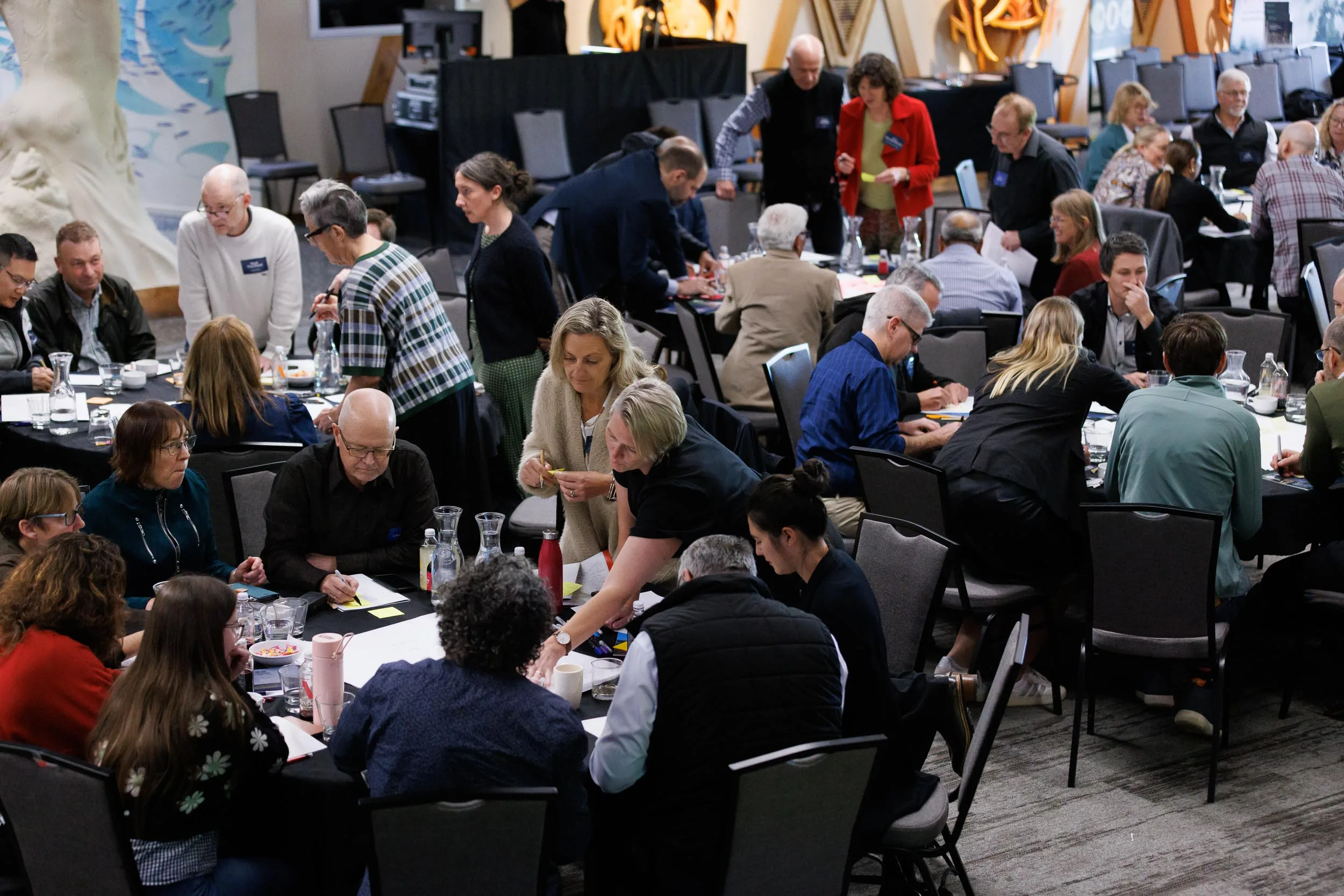
Interactive sessions in the afternoon encouraged participants to think about the future potential of natural fibres and advanced materials. Workshop facilitators Jacinta FitzGerald and Kelly McLean guided attendees through activities exploring opportunities for fibre innovation beyond current applications, prompting discussion around future markets and sustainable materials development.
Max Kennedy’s closing remarks summed up the collaborative ethos underpinning the symposium. He described BPA as a “win-win-win situation” — delivering benefits for industry and the economy, creating stronger connections between science and business, and benefitting the country’s environment, helping a more circular economy in New Zealand.
“New Zealand’s bioeconomy sector is ambitious, collaborative and increasingly focused on creating high-value, sustainable solutions,” he said.
“The key question is no longer whether New Zealand’s bioeconomy has potential, but how quickly that momentum can be scaled further.”
Click here to view a highlights reel from the event: https://www.youtube.com/watch?v=QkBB3QiAcek
Comments are closed.